The Quiet Power of Nervous System Coherence

The Quiet Power of Nervous System Coherence

In the world of high performance and elevated living, resilience is often mistaken for endurance—the ability to push harder, stay longer, and withstand more. But true resilience is quieter. It is not loud, reactive, or forceful. It is composed, adaptive, and deeply regulated. And, that comes from Nervous System Coherence.

At the center of this refined strength lies a concept rarely discussed in mainstream wellness: nervous system coherence.

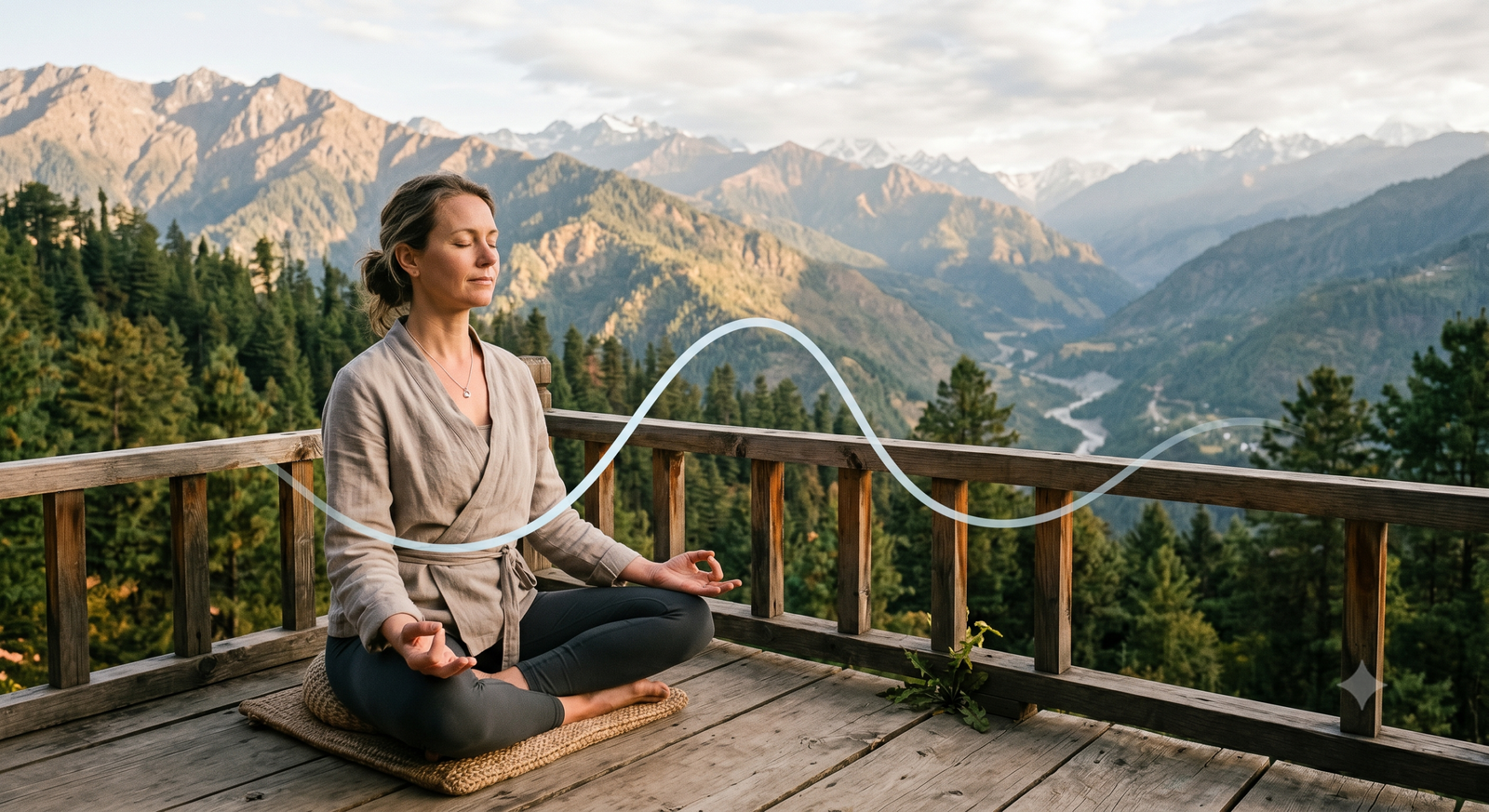
Nervous system coherence represented by calm, composed presence in a luxury wellness

This is not merely a physiological state—it is the foundation of how you experience pressure, make decisions, and sustain excellence without collapse.


What Is Nervous System Coherence?

Nervous system coherence refers to a state where the sympathetic (activation) and parasympathetic (restoration) branches of your autonomic nervous system operate in synchrony rather than conflict.

Instead of oscillating between stress and exhaustion, a coherent system moves fluidly—activating when needed, recovering efficiently, and maintaining internal stability under external pressure.

Harmonized autonomic nervous system showing balanced sympathetic and parasympathetic activity.

In simple terms:

  • You remain calm without becoming passive
  • Alert without becoming anxious
  • Engaged without becoming depleted

This is the physiological signature of embodied clarity.


Stress Is Not the Problem—Dysregulation Is

Stress, in itself, is not harmful. In fact, acute stress is essential for growth, adaptation, and performance.

The issue arises when stress is not metabolized—when the nervous system remains in prolonged activation without returning to baseline.

Comparison of stress dysregulation versus nervous system coherence in high-pressure environments.

This leads to:

  • Chronic cortisol elevation
  • Reduced heart rate variability (HRV)
  • Impaired digestion and sleep
  • Emotional reactivity and decision fatigue

Without nervous system coherence, even high achievers begin to operate from fragmentation rather than alignment.


The Role of Parasympathetic Balance

The parasympathetic nervous system—often called the "rest and digest" system—is not about slowing down life. It is about restoring internal order.

A well-regulated parasympathetic response allows you to:

  • Recover rapidly after stress exposure
  • Maintain emotional composure in high-stakes environments
  • Sustain long-term cognitive clarity
  • Access deeper states of creativity and intuition
Parasympathetic activation through breathwork in a luxury wellness retreat environment.cloud

In luxury wellness, this is where the conversation shifts—from burnout recovery to performance sustainability.

Nervous system coherence is not achieved by eliminating stress, but by enhancing your capacity to return to parasympathetic balance quickly and efficiently.


True Resilience: The Ability to Hold Pressure Without Fracture

There is a distinct difference between someone who “handles stress” and someone who embodies resilience.

The former copes. The latter remains internally stable regardless of external intensity.

Emotional resilience and nervous system coherence under pressure in leadership settings

True resilience is:

  • The ability to sit in uncertainty without urgency
  • The capacity to process emotion without suppression
  • The discipline to respond rather than react

This is where nervous system coherence becomes a strategic advantage—not just a wellness concept.

Because in leadership, business, and life, your nervous system determines the quality of your perception.


Signs of a Coherent Nervous System

A regulated and coherent system expresses itself subtly but powerfully:

  • Breath is slow, deep, and rhythmic
  • Heart rate variability is high
  • Thoughts are clear, not scattered
  • Emotions move without lingering
  • Energy is stable throughout the day
Slow rhythmic breathing indicating nervous system coherence and autonomic balance

This state is not accidental—it is cultivated.


Practices That Build Nervous System Coherence

For those operating at high levels, the goal is not relaxation—it is precision regulation.

1. Breathwork for Autonomic Alignment

Slow, nasal breathing with extended exhales stimulates vagal tone and enhances parasympathetic activation.

Breathwork technique improving nervous system coherence and vagal tone

Example: 4-64\text{-}64-6 breathing (inhale 4 seconds, exhale 6 seconds)

2. Sound-Based Regulation

Therapeutic sound frequencies can entrain brainwaves and shift the nervous system toward coherence.

Sound healing therapy supporting nervous system regulation and coherence

3. Cold Exposure and Contrast Therapy

Short, controlled stressors followed by recovery train the nervous system to transition efficiently between states.

Cold exposure therapy enhancing stress adaptation and nervous system resilience

4. Mindful Movement

Practices like Tai Chi walking or slow yoga integrate breath, movement, and awareness—creating systemic coherence.

Mindful movement practices improving parasympathetic balance and nervous system coherence

5. Emotional Processing Discipline

Unprocessed emotional residue is one of the primary disruptors of nervous system balance.

Emotional processing practices supporting nervous system regulation and inner balance

Why High-Net-Worth Individuals Must Prioritize This

In high-responsibility environments, the cost of dysregulation is amplified.

  • Poor decisions under stress
  • Strained relationships
  • Reduced creative insight
  • Long-term health decline
High-performance leadership supported by nervous system coherence and mental clarity

Nervous system coherence becomes a non-negotiable asset—not just for personal well-being, but for sustained leadership and legacy building.


The Prana Privé Perspective

At Prana Privé, we view nervous system coherence as the foundation of elevated living.

Luxury wellness retreat experience cultivating nervous system coherence and inner mastery

It is not a trend, nor a temporary practice—it is a lifelong refinement of your internal environment.

Because when your system is coherent:

  • Pressure becomes data, not threat
  • Silence becomes clarity, not emptiness
  • Stillness becomes power, not inactivity

And from this place, you do not merely perform—you operate with precision, presence, and permanence.

Metabolic Elegance: Why Stable Energy Is the Signature of Longevity

Metabolic Elegance: Why Stable Energy Is the Signature of Longevity

In the language of true luxury, vitality is the ultimate asset.

Not the fleeting kind that comes from caffeine, sugar, or the adrenaline of an overloaded schedule — but the quieter, more enduring kind. The kind that allows you to rise with clarity, move through your day with composure, and age with grace. This is the essence of metabolic elegance.

At Prana Privé, we believe that the future of refined living is not simply about indulgence. It is about intelligence. It is about creating a body and life that generate stable energy, resist metabolic decline, and support longevity from the inside out.

Stable energy is no longer a wellness trend. It is a luxury standard.

The Luxury of Stable Energy

There is something deeply refined about a person whose energy does not collapse in the afternoon, whose mind remains clear under pressure, and whose mood stays balanced even in demanding environments.

Confident wellness-focused professional working with calm focus, representing stable energy and refined productivity.

This is what blood sugar stability makes possible.

When blood sugar rises and falls too sharply, the body pays the price. Energy becomes inconsistent. Focus becomes fragmented. Cravings intensify. Irritability appears where calm should live. Over time, this instability contributes to deeper concerns such as insulin resistance, type 2 diabetes, inflammation, and cardiovascular strain.

By contrast, stable blood sugar creates a foundation for sustained performance. It supports mental clarity, emotional steadiness, physical endurance, and graceful aging. In the world of premium wellness, this is not a minor detail. It is the foundation.

What Metabolic Flexibility Really Means

Metabolic flexibility is the body’s ability to adapt — to shift efficiently between fuel sources depending on need.

Abstract visual representing metabolic flexibility, fuel balance, and adaptive energy flow.

A metabolically flexible body can use glucose when it is available and rely on stored fat when needed, without stress or dysfunction. This adaptability is one of the clearest signs of metabolic health. It reflects resilience, efficiency, and balance.

When metabolism becomes rigid, the body struggles to regulate energy. Hunger can feel constant. Fatigue becomes familiar. Crashes follow meals. Recovery slows down. Over time, this rigidity increases the risk of obesity, prediabetes, diabetes, and cardiovascular disease.

Metabolic elegance, then, is not about control for its own sake. It is about restoring the body’s natural intelligence.

Why Blood Sugar Stability Matters for Longevity

Longevity is not only measured in years. It is measured in the quality of those years.

Elegant balanced meal showing protein, fiber, and healthy fats for blood sugar stability and longevity.

A long life without vitality is not the goal. The goal is to preserve energy, cognition, strength, and presence well into later life. Blood sugar stability plays a central role in that outcome.

Chronically elevated glucose can damage blood vessels, accelerate inflammation, and contribute to the development of both diabetes and heart disease. These are not isolated conditions. They are connected through the deeper architecture of metabolic dysfunction.

Supporting stable blood sugar helps:

  • Improve insulin sensitivity.
  • Reduce inflammation.
  • Protect cardiovascular health.
  • Support healthy energy production.
  • Lower the long-term burden on the body.

This is why metabolic health is one of the most powerful longevity levers available.

The Connection Between Diabetes and Cardiovascular Health

Diabetes and cardiovascular disease are often discussed separately, but they are deeply interwoven.

Wellness consultation with health markers, illustrating the connection between metabolic health, diabetes, and cardiovascular risk.

When the body becomes resistant to insulin, glucose remains elevated in the bloodstream. This creates stress not only on the pancreas, but also on the arteries, the heart, and the nervous system. Over time, this can contribute to plaque buildup, poor circulation, and a greater risk of serious cardiovascular events.

What makes this especially important is that many of these risks build quietly. They do not always announce themselves loudly at first. Often, the earliest signs are subtle: low energy, afternoon crashes, weight fluctuations, cravings, sleep disruption, or reduced stamina.

This is where proactive metabolic care becomes essential. By stabilizing blood sugar early and consistently, we support both current vitality and future resilience.

A Refined Approach to Metabolic Health

At Prana Privé, we see metabolic health as part of a broader philosophy of elegant living.

Luxury wellness retreat setting with movement and breathwork supporting metabolic health and elegant living.

It is not about extremes, deprivation, or harsh discipline. It is about precision and rhythm. It is about giving the body what it needs to function beautifully.

A more elegant metabolic lifestyle often includes:

  • Meals that balance protein, fiber, healthy fats, and thoughtful carbohydrates.
  • Movement that supports insulin sensitivity, such as walking, strength training, and mobility work.
  • Restorative sleep that allows hormonal repair and energy regulation.
  • Stress management practices that calm the nervous system.
  • Consistent routines that reduce metabolic chaos.

These are not ordinary habits. They are luxury practices because they preserve what is most valuable: your energy, your clarity, and your capacity to live well.

Graceful Aging Through Better Metabolism

Aging gracefully is not about resisting time. It is about aging without collapse.

Graceful mature adult in a serene natural setting, representing healthy aging and metabolic vitality.

When metabolism is well regulated, the body is better able to preserve muscle, maintain cognitive sharpness, support hormonal balance, and reduce the inflammatory burden that accelerates aging. This means better quality of life, not just longer life.

In practical terms, this can show up as:

  • More stable daily energy.
  • Better mood and emotional resilience.
  • Improved physical recovery.
  • Lower risk of metabolic disease.
  • Greater confidence in one’s body over time.

This is what modern longevity looks like: not striving to feel young forever, but remaining vital, capable, and clear at every stage of life.

The New Definition of Wellness Luxury

The modern luxury consumer is changing.

Quiet luxury wellness lifestyle with morning ritual elements, symbolizing refined health and stable energy.

The new elite are not only investing in aesthetics, travel, and experiences. They are investing in vitality. They are asking deeper questions about how to feel better, age better, and perform better without sacrificing health in the process.

Stable energy has become a new status symbol because it reflects discipline, intelligence, and self-respect. It says that the body is being cared for at a foundational level. It says that performance is not being purchased at the cost of future health.

This is the Prana Privé philosophy: wellness as refinement, health as strategy, longevity as a way of life.

Living the Prana Privé Way

Metabolic elegance is not built in a single day. It is shaped through consistent choices that honor the body’s natural design.

Premium editorial wellness scene with calm ritual elements representing the Prana Prive way of living.

It begins with awareness — understanding how your body responds to food, stress, sleep, and movement. It continues through refinement — choosing practices that support blood sugar balance and metabolic flexibility. And it matures into embodiment — a way of living that feels strong, graceful, and sustainable.

For those who value excellence, this is the deeper form of luxury.

Not excess.
Not depletion.
But stable energy, resilient health, and the freedom to live beautifully for years to come.

The Architecture of Longevity: Designing a Life That Ages Beautifully

The Architecture of Longevity: Designing a Life That Ages Beautifully

Longevity as the Preservation of Vitality, Clarity, and Coherence

Longevity is often discussed in clinical terms — biomarkers, protocols, interventions, years gained. Yet the most meaningful expression of longevity is rarely found in numbers alone. At its most refined, longevity is a way of living. It is the art of designing a life that can hold vitality, clarity, beauty, and inner steadiness over time.

A refined wellness still life in soft neutral tones with linen, stone, and natural light, representing calm, balance, and intentional living.

At Prana Prive, longevity is not approached as a trend, nor as a pursuit of endless optimization. It is understood as an architecture: a deliberate arrangement of rhythms, environments, choices, and inner states that allow a person to age with grace rather than friction. To live well for longer is not simply to extend life. It is to preserve the quality of being alive.

Longevity as design

To age beautifully is not only to maintain health. It is to remain coherent. It is to create a life in which energy is not constantly borrowed from the future, but restored in the present. It is to cultivate conditions in which the body feels supported, the mind becomes less reactive, and the self is not diminished by the pace of modern living.

This is where longevity becomes less about resistance and more about authorship. Rather than asking how to outrun time, the deeper question becomes: how can life be arranged so that vitality is protected, elegance is sustained, and restoration is woven into the structure of each day?

Why rhythm matters?

Modern life often rewards intensity. More output. More movement. More stimulation. More access. But the body does not thrive on ambition alone. It responds to rhythm. It trusts regularity, spaciousness, and signals of safety. It ages well when it is not forced to constantly compensate for overstimulation, depletion, and internal noise.

A life designed for longevity must therefore honour the body’s need for cadence. Sleep, nourishment, movement, nervous system regulation, and emotional recovery are not isolated practices. They form an ecosystem. When one is neglected, the others begin to strain. When they are respected as interconnected, the system regains intelligence, adaptability, and resilience.

The most enduring vitality is rarely built through extremes. It is built through repeated conditions of support — subtle, intelligent, and sustainable enough to become a way of life.

Alignment as the hidden luxury

There is another dimension to longevity that is often overlooked, even in sophisticated wellness conversations: alignment. Many seek to preserve youth. Far fewer seek to preserve congruence. And yet it is alignment that gives longevity its meaning.

A person may be physically well and still feel inwardly depleted if their life is misaligned with their nature. A calendar may be full, yet the inner world may feel starved. A high-performing life can still become a costly one when identity is shaped only by expectations, roles, and endless external demand.

A contemplative portrait of a person in soft light near a window, symbolizing reflection, alignment, and inner clarity.

To age beautifully is not merely to retain function. It is to remain in relationship with essence. It is to live in such a way that vitality does not feel cosmetic, but deeply inhabited.

This is the hidden luxury of longevity: not just looking composed, but feeling coherent. Not simply performing well, but living from a place that remains internally intact.

Elegance as discipline

The language of luxury is often misunderstood as aesthetic alone. In truth, the deepest luxury is structural. It lies in what is protected, what is removed, and what is made possible by design. A beautifully considered environment is not indulgent because it appears refined. It is powerful because it reduces friction and supports a better state of being.

The same is true of a life designed for longevity. It does not overwhelm itself. It creates space. It allows room for quiet, for recovery, for reflection, for enoughness. It does not chase stimulation at the cost of nervous system peace. It does not glorify exhaustion as achievement. It chooses discernment over excess.

At Prana Prive, this is seen as the true discipline of elegance. Longevity is not about doing more in the name of health. It is about living with enough intelligence to recognise what preserves vitality, protects clarity, and sustains refinement over time.

A life that holds more

The question is not simply how to live longer. The question is how to build a life that can hold more of what matters, for longer — more meaning, more steadiness, more beauty, more emotional range, more presence, more depth of experience.

This kind of longevity asks for a different standard. It asks for recovery to be valued as seriously as performance. It asks for the quality of one’s inner state to be protected with the same care as any external accomplishment. It asks for environments that do more than impress — environments that recalibrate.

A life built in this way does not become smaller with discipline. It becomes more spacious. The body feels less burdened. The mind becomes cleaner in its decisions. The self returns to a more refined baseline, one that can lead, love, create, and endure without constant internal cost.

A Refined Way to Age Beautifully

To age beautifully is to understand that time itself is not the threat. The greater risks are disconnection, chronic misalignment, and the quiet erosion that comes from living too long without restoration. But when life is designed with care, longevity becomes something far more elegant than maintenance. It becomes artistry.

A serene mountain landscape at dawn with mist and soft golden light, suggesting renewal, spaciousness, and longevity.

The body softens into trust. The mind becomes less crowded. Energy feels less borrowed and more self-sustaining. And over time, the years are not merely survived — they are inhabited with presence, distinction, and grace.

That is the true architecture of longevity.

At Prana Prive, longevity is approached as a refined practice of restoration, coherence, and intelligent living. For those drawn to a more elegant way of sustaining vitality, the conversation begins with one question: what in life must be redesigned so that well-being is no longer occasional, but foundational?

Discover experiences, reflections, and spaces created for those who value longevity not only as a science, but as a way of being. Call us today or email to concierge@pranaprive.com.

This Ancient Breath Retention Technique Could Be the Missing Link in Your Anxiety Healing

This Ancient Breath Retention Technique Could Be the Missing Link in Your Anxiety Healing

Why the “Sacred Pause” in Your Breath Matters

In the classical yoga tradition, conscious pauses in the breath are considered one of the most powerful gateways into stillness, clarity, and inner strength.
Here, breath retention means a deliberate, comfortable pause either after a smooth inhalation (with the lungs gently filled) or after an exhalation (with the lungs comfortably empty), practiced with awareness rather than force.

At Prana Privé, we see breath retention pranayama as a bridge between ancient wisdom and modern nervous system science—a way to move from “always on” survival mode into a more grounded, resilient way of being.

Diagram of the breath cycle showing inhalation, breath retention, exhalation, and gentle external breath hold in pranayama
The four phases of a conscious breath: inhale, pause, exhale, and the gentle external pause.

Table of Contents


How Breath Retention Affects Your Brain, Heart, and Nervous System

When you briefly hold the breath, you subtly change levels of oxygen and carbon dioxide in the blood, which sends signals to brain centers that regulate your heart, blood vessels, and emotional state.
Slow, deliberate yogic breathing that includes gentle retention has been shown to increase parasympathetic (rest‑and‑digest) activity and to improve heart rate variability, an important marker of stress resilience.

Research on slow breathing shows that working at around six breaths per minute can strengthen interactions between the heart, lungs, and brain, improving autonomic flexibility and emotional regulation.
However, stronger external breath holds can temporarily raise blood pressure and cardiac workload, which is why these methods are considered advanced pranayama techniques and must be approached with care.

Illustration of lungs, heart, and vagus nerve showing how breath retention pranayama influences the autonomic nervous system
How slow, intentional breathing speaks directly to your heart and nervous system.

Health Benefits of Breath Retention Pranayama

1. Expanding Lung Capacity and Respiratory Strength

A one‑month program of daily breath retention practice in healthy young adults led to significant improvements in maximum breath‑holding time and peak expiratory flow rate, both indicators of better lung capacity and stronger respiratory function.
Practitioners of traditional pranayama also report that gentle internal breath holds strengthen the diaphragm, improve chest expansion, and help clear residual air from the lungs, supporting more efficient breathing overall.

For people wanting to build more resilient lungs—whether for yoga, trekking, or daily life—breath retention pranayama, layered over a foundation of slow breathing practice, is a powerful tool.

Graphic of expanding lungs next to a person practicing deep yogic breathing to improve lung capacity with pranayama
Training the lungs to expand fully with slow, steady breathwork.

2. Reducing Anxiety and Regulating Stress

Multiple studies show that yogic breathing practices, including those with structured breath retention, can reduce anxiety, negative affect, and perceived stress.
A four‑week pranayama intervention led to decreased state anxiety and negative mood, along with changes in brain areas involved in emotion processing, such as the amygdala and prefrontal cortex.

Slow, deep breathing at a controlled pace has been found to lower physiological arousal, reduce physical tension, and improve markers of autonomic balance, making it a clinically relevant tool for anxiety regulation.
For many of our guests, breathwork for anxiety—especially gentle internal breath holds followed by long exhalations—becomes a portable way to calm spirals and come back to their body.

Person taking a mindful breathing pause to relieve anxiety using gentle breath retention and slow exhalation
A simple breathing pause to soften anxiety in the middle of an ordinary day.

3. Sharper Focus, Attention, and Emotional Control

In a 30‑day breath retention program, participants showed significant improvements in tests of attention, concentration, and working memory, such as digit substitution and letter cancellation tasks.
Another study using yoga breathing with intermittent breath holding found better response inhibition—the ability to pause before acting impulsively—suggesting enhanced executive control.

For creators, leaders, and knowledge workers, this means breath retention pranayama can be part of a cognitive hygiene ritual before deep work, writing, or decision‑making, helping to clear mental clutter and stabilize focus.

One conscious breath before deep work to clear mental clutter and sharpen focus.

4. Supporting Heart and Autonomic Health (When Done Gently)

Slow yogic breathing, with or without mild retention, has been shown to reduce resting heart rate, improve baroreflex sensitivity (blood pressure regulation), and increase heart rate variability in healthy individuals.
Such changes indicate a more adaptive autonomic nervous system and better resilience to everyday stressors.

However, research on stronger external breath holds shows transient increases in blood pressure and cardiac load during the practice, which is why these forms are not appropriate for everyone and must be phased in gradually if used at all.


Honest Disadvantages and Risks You Need to Know

1. Cardiovascular Strain and Blood Pressure Spikes

Studies of external breath holds in pranayama document significant rises in systolic and diastolic blood pressure, mean arterial pressure, and cardiac workload during the hold.
In some cases, blood pressure does not immediately return to baseline after the practice, suggesting a genuine cardiovascular challenge rather than a neutral pause.

For people with uncontrolled hypertension, heart disease, history of stroke, or other serious cardiovascular conditions, this added strain can be risky and requires medical clearance and expert supervision before attempting advanced pranayama technique work.

2. Dizziness, Discomfort, and Panic Responses

If you push breath retention beyond your comfortable capacity, you may experience dizziness, pressure in the head or chest, or a feeling of suffocation, especially with long external holds.
For those already prone to anxiety or panic, such sensations can reinforce fear and make breathwork feel unsafe, undermining all the potential benefits.

This is why at Prana Privé we build from simple slow breathing practice toward very modest internal breath holds, tracking each guest’s nervous system responses and never chasing performance.

3. Not Appropriate for Everyone

Breath retention is generally discouraged or requires strict modification for certain groups, including people with uncontrolled high blood pressure, serious heart disease, severe asthma or chronic lung disease, pregnancy, or recent major surgery.
In those cases, safer choices include diaphragmatic breathing without holds, alternate nostril breathing at an easy pace, or humming‑based pranayama, all of which show benefits for anxiety and vagal tone.

Yoga teacher gently guiding a student with a reminder to practice advanced breath retention pranayama safely
Advanced breathwork is most powerful when it’s held with care, not pushed with ego.

Who Should Practice Only With Guidance or Avoid It

You should avoid strong or prolonged breath retention and work only with simple slow breathing unless cleared by a professional if you:

  • Have uncontrolled hypertension, significant cardiovascular disease, or previous stroke.
  • Have severe asthma, COPD, or chronic respiratory issues.
  • Are pregnant or in the immediate postpartum phase with complications.
  • Experience frequent panic attacks where breath‑related sensations are triggering.

Always consult a healthcare provider and a qualified pranayama teacher before experimenting with advanced breath patterns if you are living with medical conditions.


How We Safely Build Toward Breath Retention at Prana Privé

Before any guest tries longer breath holds, we spend time establishing a stable foundation of smooth, slow breathing at a pace the nervous system can trust. Research shows that slow breathing at fewer than ten breaths per minute can enhance parasympathetic activity and improve cardio‑respiratory coordination even without retention.

Our general educational framework looks like this (for informational purposes only, not as medical advice):

  1. Phase 1 – Slow Rhythmic BreathingWe start with diaphragmatic breathing, often at a gentle four‑count inhale and six‑count exhale, focusing on wave‑like expansion of the belly and lower ribs.
    The emphasis is on softness, relaxed facial muscles, and a sense of safety—no breath holds yet, just training the body to trust slow breathing.
  2. Phase 2 – Short Internal Breath HoldsOnce the breath is smooth, we introduce very brief, comfortable pauses after inhalation, such as inhaling for a few counts, pausing for one or two, then exhaling slightly longer.
    Any sign of strain, dizziness, or pressure is treated as information to dial back the intensity or return to simple slow exhalations.
  3. Phase 3 – Meditative IntegrationAs guests become familiar with the pause, we pair it with simple focal points—like awareness at the heart center or the space between the eyebrows—so the breath and mind settle together.
    For many, this is where the deeper yogic breathing benefits begin to unfold: clearer perception, softer emotional reactivity, and a quiet sense of being “more inside the body.”

Stronger external holds or complex counting ratios are introduced only, if at all, in advanced sessions and always with close guidance, given the documented cardiovascular responses.


If you feel called to explore breath retention pranayama but want a container that feels safe, held, and trauma‑aware, consider joining one of our immersive retreats at Prana Privé across the globe.
We integrate evidence‑informed breathwork, nervous system education, and contemplative practices so you can experience this “sacred pause” in a way that honours your unique body and story.


Bringing Breath Retention into Modern Life

Breath retention pranayama does not have to remain confined to the mat or retreat hall. Once the basics are integrated, you can use gentle internal breath holds in many everyday contexts:

  • Before a difficult conversation, to down‑shift anxiety and speak from your center.
  • Between focused work blocks, to clear mental noise and reset your attention.
  • As part of your evening wind‑down to transition from screen‑time to sleep.

Research on both slow breathing and pranayama as a whole shows meaningful benefits for mental health, including reductions in anxiety, depressive symptoms, and perceived stress when practiced consistently

Small group practicing guided pranayama and gentle breath retention together in a wellness retreat setting
Breathing together in nature at Prana Privé—retraining the body to trust stillness again.

A Reflection

The pause between your breaths is more than empty space—it is a living threshold where your nervous system decides whether to keep fighting or to finally rest.
Scientific studies are now confirming what yogic lineages have whispered for centuries: when practiced wisely, breath retention within a slow, conscious breathing pattern can expand lung capacity, reduce anxiety, sharpen cognition, and support cardiovascular and autonomic health.

If you feel that your healing or growth journey is missing a direct, embodied way to work with your nervous system, this ancient practice might indeed be the “missing link” you have been sensing.
When you are ready to explore it with guidance, community, and mountains holding the horizon, we welcome you to experience this work in person at Prana Privé. Get in touch with us.