For the woman everyone relies on, time for yourself need not become another thing you have to earn.
There is a particular kind of morning you may recognise.
Before you have finished your tea, someone needs a decision. A message requires a reply. A family arrangement needs confirming. At work, something cannot move forward until you have looked at it.
None of these requests is necessarily unreasonable. Many come from people you love or from work you have chosen.
Yet, taken together, they leave a question quietly unanswered:
When does your day become your own?
For a woman accustomed to being dependable, time for yourself can feel surprisingly difficult to inhabit. You may know how to organise a household, lead a team, anticipate a problem, or make another person comfortable. But an afternoon with no one asking anything of you can feel unfamiliar.
This is where a different understanding of luxury begins.
Not with more to experience, acquire, or accomplish, but with a little less to hold.
You remember the appointment, the dietary preference, the conversation that needs following up. You notice when a parent sounds unusually quiet. You know which colleague needs encouragement and which family arrangement will unravel without attention.
There may be real pleasure in this competence. Being useful can express affection, commitment, and pride in what you do.
The difficulty begins when your capability is treated as permanent availability.
Because you usually manage, people may not think to ask whether you have room. Because you respond thoughtfully, another question finds its way to you.
Even when you are not doing anything visible, you may still be keeping track.
It is possible to value these roles and also want a temporary release from them. Wanting that space does not require you to withdraw your love or become less committed to your work.
It simply gives your own preferences a place in the conversation.
Time for yourself does not need a defence
There is an understandable temptation to justify rest through what it will produce.
You will return more focused. You will become more patient. You will be better able to support everyone else.
Those may be sincere hopes. But they can leave the original arrangement untouched: even your time away must prove its usefulness to others.
What if an unhurried morning were worthwhile because you enjoyed it?
What if you could read without extracting a lesson, walk without recording a distance, or sit somewhere beautiful without deciding how the experience would improve you?
This is not an argument against purposeful living. It is an invitation to leave some parts of life unmeasured.
You do not need to present a case for every hour that belongs to you. Nor must you wait until you can demonstrate that you have reached your limit.
A preference can be enough: today, you would like some quiet.
The difference between going away and being relieved
A change of location does not automatically change your role.
You can arrive somewhere beautiful and remain the organiser. You choose the restaurant, coordinate the transport, check that everyone is comfortable, and answer messages between activities.
The setting changes. Your responsibilities travel with you.
This makes the idea of being thoughtfully hosted worth considering.
Imagine arriving somewhere without having to become the coordinator. Clear information is already available. You understand what is planned and what is optional. A preference can be expressed without becoming a negotiation.
There is also room to decline.
You can join a conversation or remain quiet. You can take part without telling your life story. You can enjoy an experience without being expected to demonstrate that it has changed you.
Such details give practical meaning to care. They allow you to be a participant rather than the person quietly keeping everything running.
Some hours can remain unassigned.
A quieter meaning of luxury
Luxury is often described through visible things: exceptional rooms, beautiful materials, carefully prepared food.
There is pleasure in those things. But for this conversation, consider another measure: how much attention must you spend managing the experience?
A comfortable room matters differently when you can actually enjoy being in it. A meal feels different when you are not overseeing everyone else’s preferences.
Privacy, too, can be understood as more than physical seclusion. It can mean not having to explain your mood, disclose something personal, or make yourself socially available.
None of this makes solitude superior to company. A lively table may be exactly what you want.
The distinction is whether you have a genuine choice.
For the woman whose days contain many obligations, choosing how to participate may be more meaningful than adding another impressive activity to an already full schedule.
What do you enjoy when no one is asking?
The question sounds simple until you try to answer it without reference to anyone else.
What would you choose to eat? Would you prefer company or silence? Would you go outside, read, swim, sleep, or do very little?
You might know immediately. Or you might discover that you have become more practised at identifying other people’s preferences than your own.
There is no need to turn that discovery into another criticism.
Start with something small enough to answer honestly.
Perhaps you want breakfast without conversation. Perhaps you would like to finish a chapter before checking your phone. Perhaps the walk you keep postponing appeals more than the elaborate wellness routine you think you ought to follow.
These are modest preferences, but they are still yours.
The point is not to uncover a dramatic new identity. It is to make room for the person already present beneath the daily negotiations.
Where this belongs in a longevity conversation
Longevity can prompt useful questions about the future: what you hope to keep doing, whom you want to spend time with, and which parts of life matter most.
Within that conversation, it is worth asking how you want your ordinary days to feel.
Time away is not a promise of a longer life. A quiet afternoon cannot replace appropriate healthcare, and a beautiful experience should not be presented as treatment.
If you hope for many more years, where do your own interests belong within them? What would you regret continually postponing? Which pleasures have become conditional on finishing everything else first?
These questions do not require a perfect answer. They offer a way to connect the future you imagine with the day you are actually living.
Making room without making another project
A pause need not begin with travel or a complete rearrangement of your life.
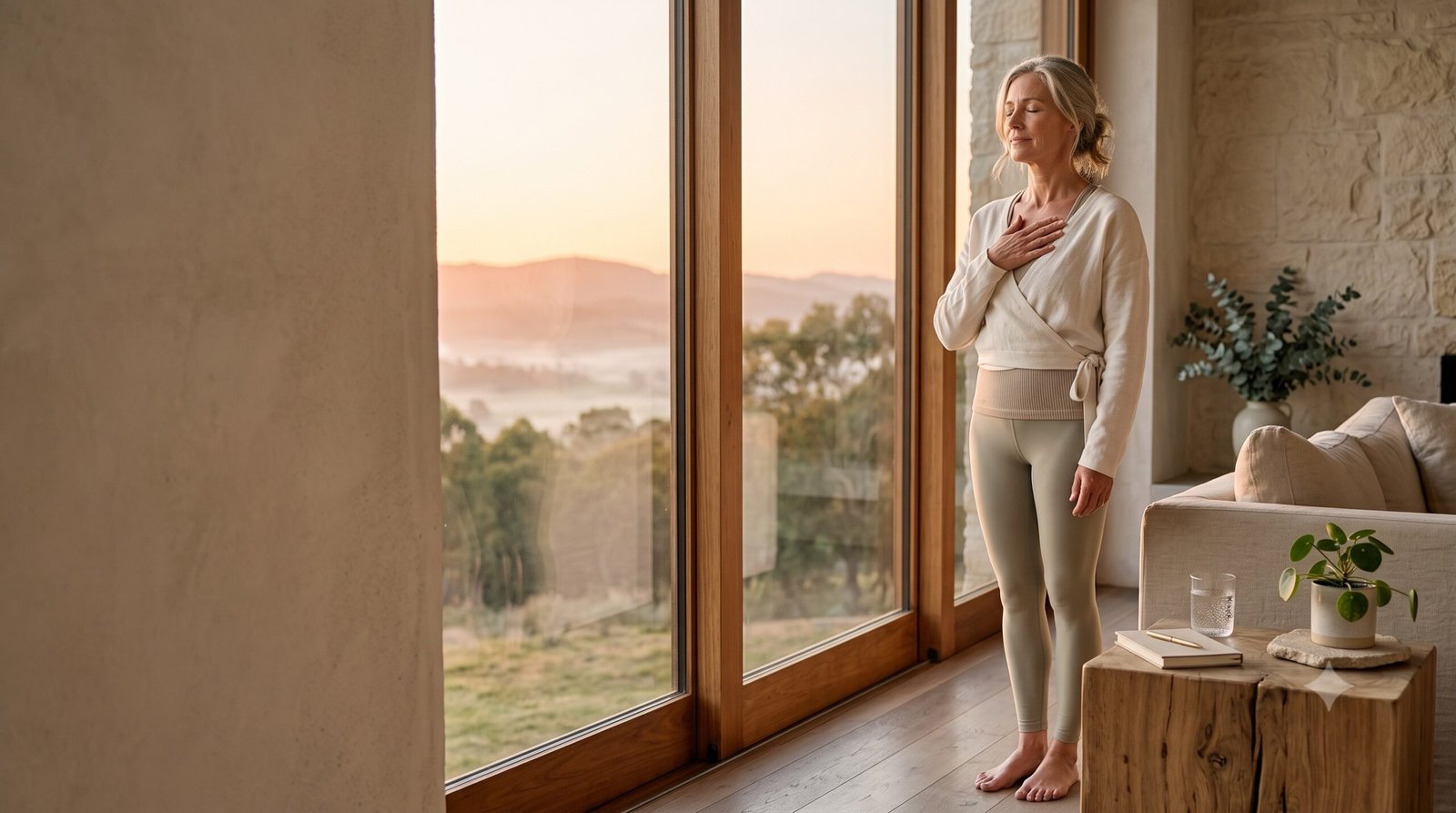
It might begin with one clearly protected period: an hour on Sunday, an evening without appointments, a walk that someone else knows not to interrupt except when necessary.
Keep the arrangement practical.
Decide what genuinely needs covering, who can cover it, and what can wait. Where possible, make the handover explicit rather than hoping others will notice that you need space.
This is not always simple. Work, finances, caregiving, and family circumstances shape what is possible. Time away is not equally accessible, and difficulty finding it is not evidence of personal failure.
Choose a scale that fits your circumstances.
Then resist the urge to fill the opening immediately. You do not need a programme for every pause. Leave enough room to discover what you would actually like to do.
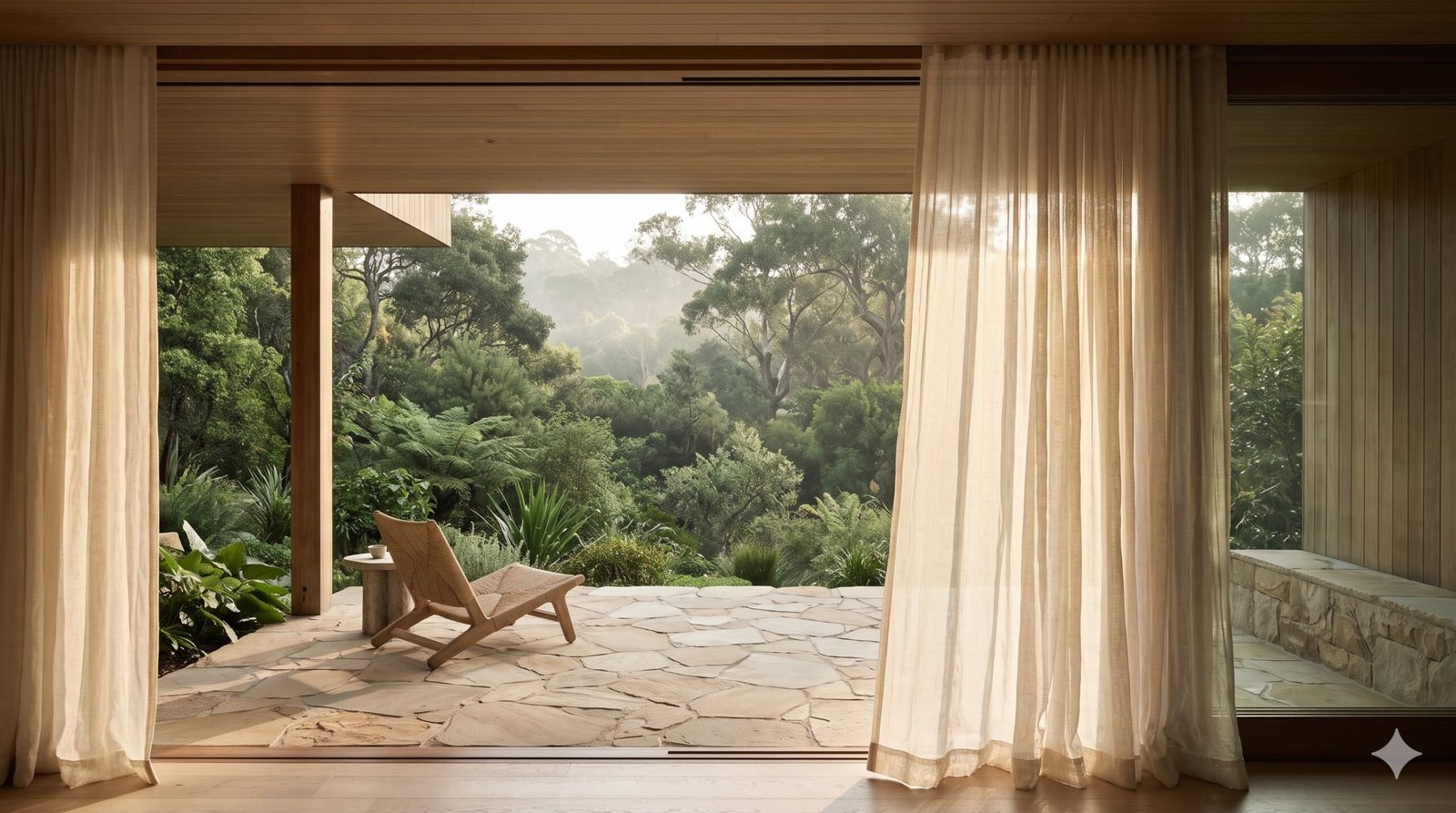
Time outside, without a destination that needs defending.
You can care deeply and still step away
Being needed can be meaningful. It can also become so familiar that you forget there are other ways to belong.
You can be loved for your company, not only your usefulness. You can join a meal without organising it. You can listen without solving. You can let someone else take responsibility and allow them to do it differently.
Perhaps that is the permission worth practising: not an escape from the people and work you value, but some time in which you are not required to hold everything together.
Nothing remarkable has to happen during those hours.
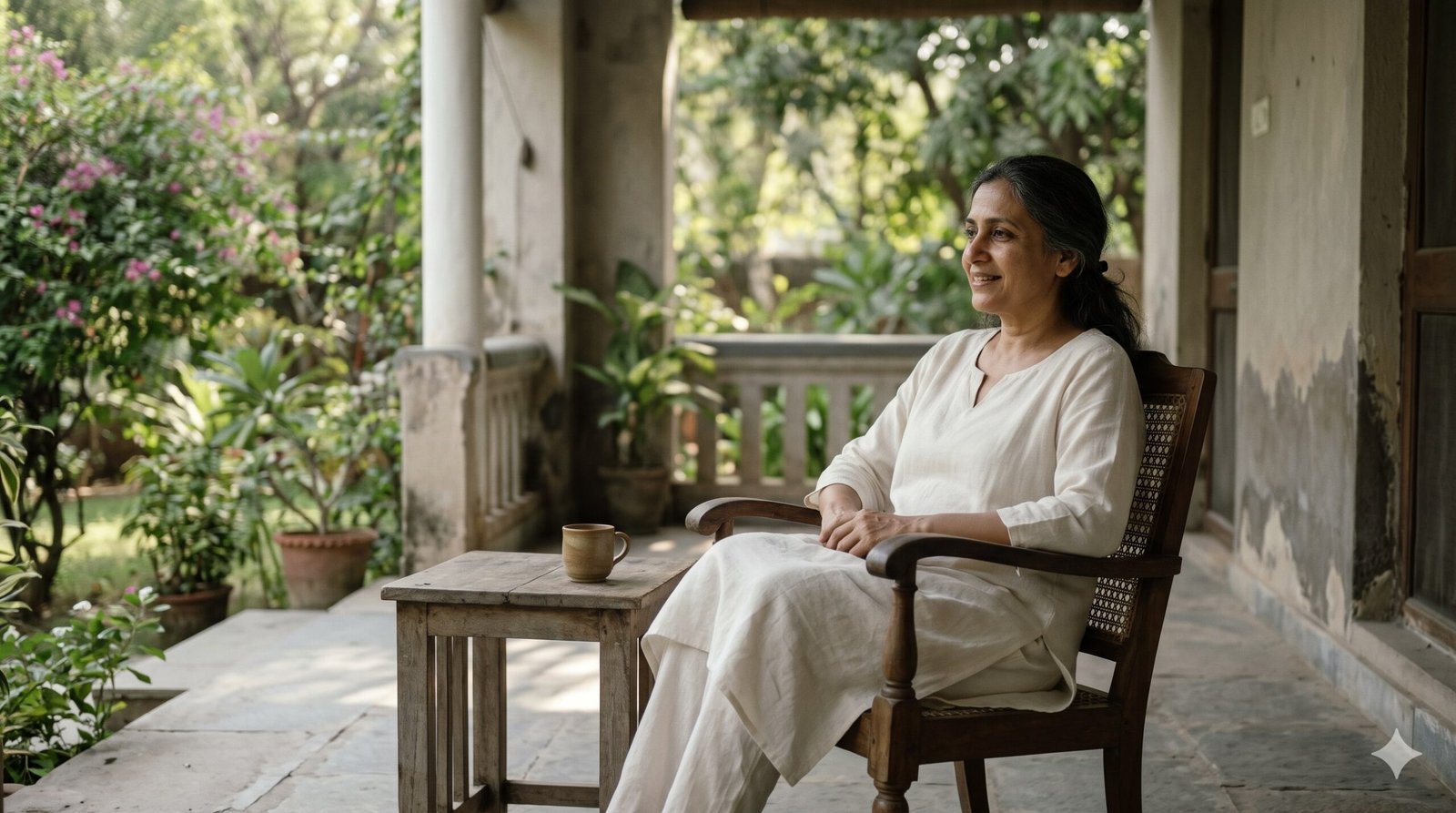
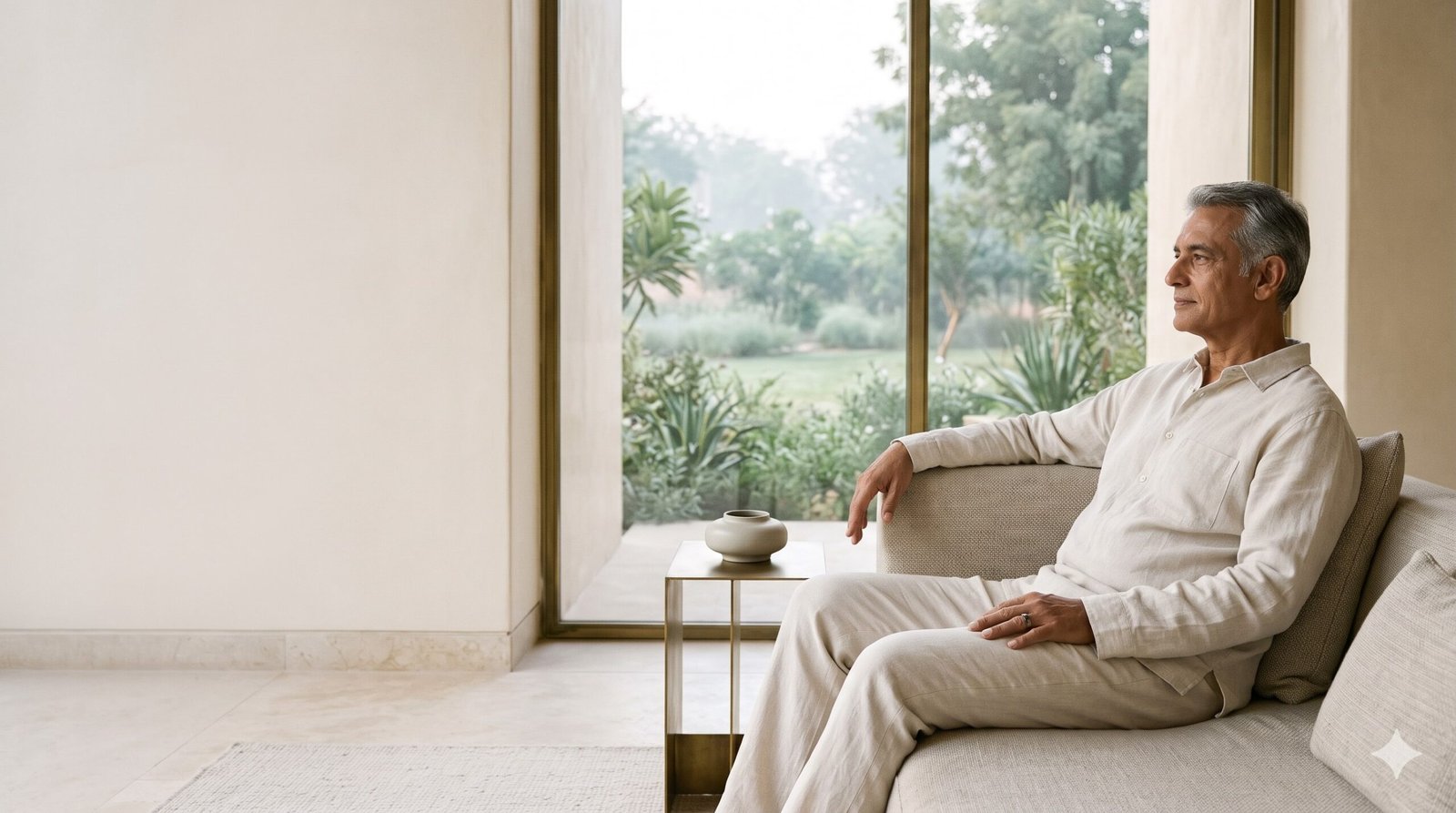
The tea may simply stay warm long enough to finish. A conversation may unfold without an agenda. You may notice something in the garden you have passed many times.
For a while, your attention can follow your own curiosity.
What would you choose for the next hour if no one needed anything from you?
Should the themes explored in The Pulse resonate with the season you are in, The Concierge would be pleased to receive your private enquiry. We respond with discretion, clarity, and personalised guidance shaped around your individual context.
A longer life is only part of the story. Explore healthspan vs lifespan and what you want to preserve: independence, connection and the freedom to live well.
Longevity is shaped not only by our routines, but by the places in which they unfold. Explore how architecture, light, silence, landscape, and pace can support recovery, clearer thinking, and emotional well-being—and why a life well lived deserves an environment that supports it.
Biohacking asks how we can optimise the body. A more discerning longevity philosophy also asks how well we understand it. Prana Privé explores the meeting of biosensing, internal awareness, and subtle daily practices—and why the future of high-trust wellness depends on context, proportion, and intelligent care.
Modern success can carry a hidden biological cost. Discover how chronic stress and low-grade inflammation influence aging, energy, and long-term vitality—and why recovery deserves a place alongside ambition.
Feeling tired, mentally foggy, or dependent on caffeine during a demanding season? Discover why recovery becomes harder when life is busy and how a sustainable vitality reset can help support steadier energy, better focus, restorative sleep, and greater resilience—without relying on extreme routines or quick fixes.
In a world that glorifies burnout, sleep has quietly become the ultimate status symbol. This article reframes deep, restorative sleep as the foundation of beauty, cognitive precision, longevity, and emotional clarity—and shows why high performers must protect it with intention. Discover how the new luxury is not what you display, but what you safeguard each night.
True resilience is not the ability to withstand endless pressure, but the capacity to remain internally coherent beneath it. In this article, we explore how nervous system coherence, stress regulation, and parasympathetic balance form the quiet foundation of high performance, emotional steadiness, and lasting inner strength.
Discover metabolic elegance with Prana Prive — where stable energy, blood sugar balance, and metabolic flexibility support longevity, performance, mood, and graceful aging. Learn how refined metabolic health can help reduce diabetes and cardiovascular risk while elevating everyday vitality.
A refined exploration of longevity as a way of living — where rhythm, restoration, alignment, and environment shape the ability to age with grace, clarity, and distinction. Longevity is not about lifespan but about healthspan.
A guided pranayama session that introduces breath retention (kumbhaka) as a tool for calming the nervous system and sharpening focus. The practice walks through gentle ratios of inhalation, hold, and exhalation, with clear cues and safety notes so you can explore longer retentions without strain.

0 Comments