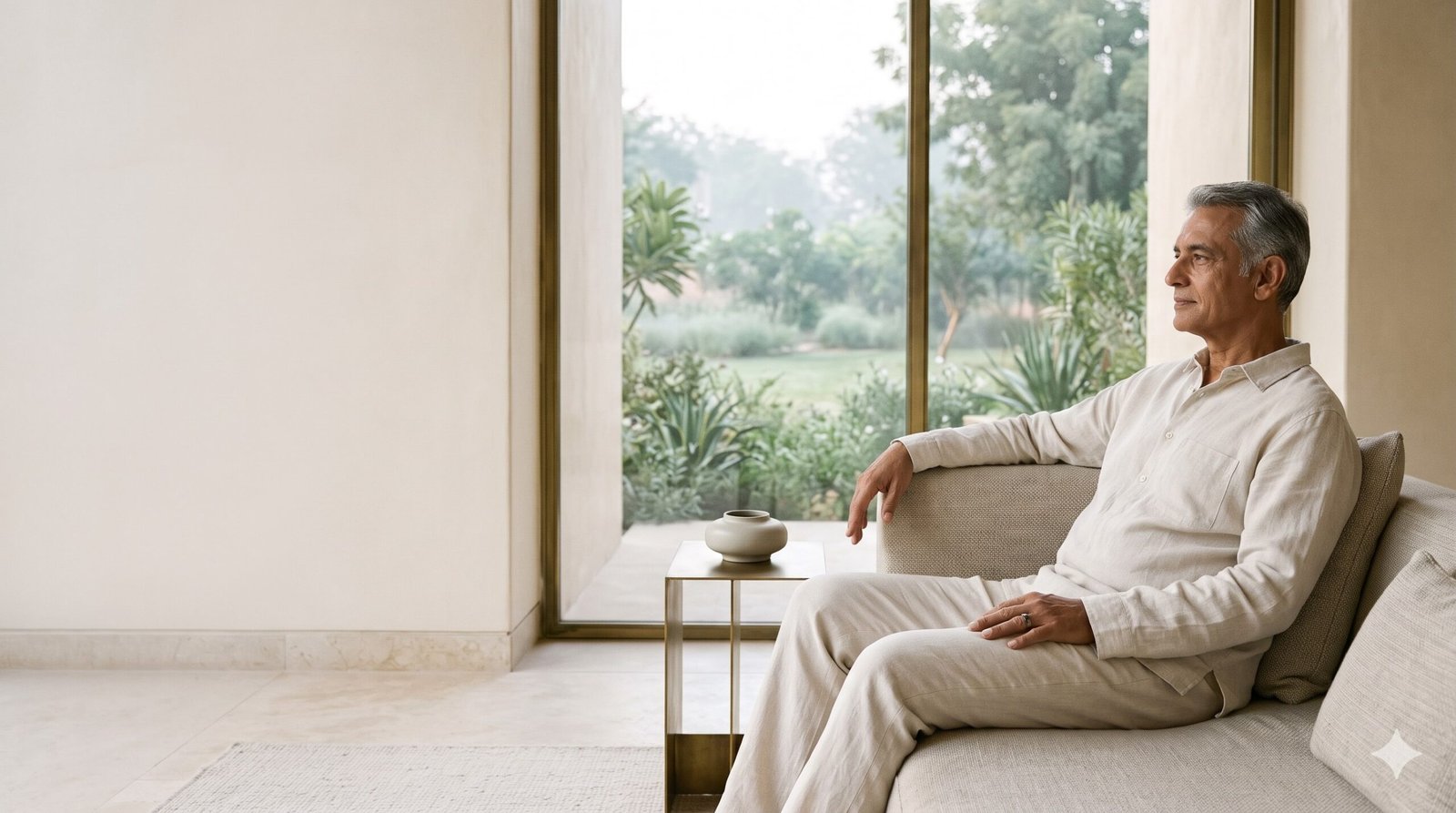
There is a particular image of longevity that has become difficult to escape: the wrist covered in sensors, the morning arranged around supplements, the cold plunge before sunrise, the dashboard assigning a number to last night’s sleep.
It is an image of commitment. Sometimes, it is also an image of control.
Yet a quieter question sits beneath the expanding world of optimisation: are we becoming more attentive to our bodies, or simply more attentive to the instruments that describe them?
The conversation around biohacking vs. biosensing begins here. Not with a rejection of technology, nor with the romantic belief that intuition can replace medicine, but with a more discerning understanding of what it means to live well.
At Prana Privé, longevity is understood as the art of sustaining vitality, clarity, and coherence over time. Through that lens, the future of wellness need not be louder, more complicated, or more visibly demanding.
It may be more intelligent because it is more responsive.
More personal because it makes room for lived experience.
And more trustworthy because it recognises the difference between a signal, an interpretation, and a promise.
Biohacking vs. Biosensing: Understanding the Difference
Biohacking is a broad, loosely defined term. In wellness culture, it often describes deliberate attempts to influence performance, recovery, or biological function through changes in behaviour, technology, nutrition, or other interventions.
Some activities associated with it are familiar foundations of health. Others are experimental, commercially amplified, or supported by evidence that is narrower than the surrounding claims.
Biosensing has a more specific technical meaning: using sensors to detect biological signals. A wearable that records pulse-related signals is an example. Devices can help estimate measures such as heart rate, sleep patterns, or certain aspects of recovery, although their accuracy depends on the device, metric, and conditions of use
The two are not scientific opposites. A biohacker may use biosensors, and a biosensor does not automatically produce a more thoughtful relationship with health.
For this article, the contrast is therefore philosophical:
- External optimisation begins with the question, “What can I change, add, or improve?”
- Internal intelligence begins with the question, “What is happening, and what response is appropriate?”
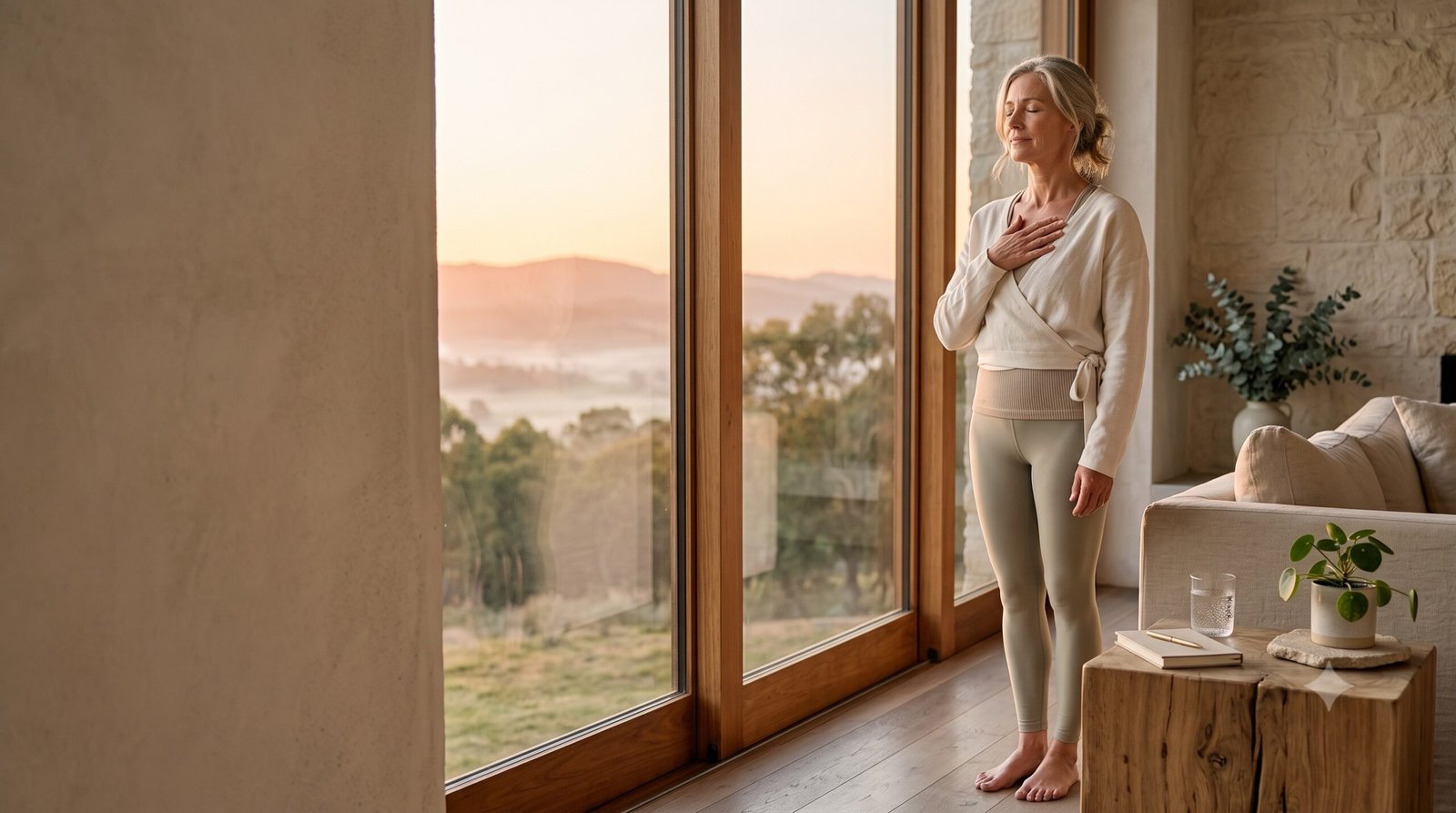
Internal intelligence also includes something distinct from technological biosensing: interoception, the processes through which the nervous system senses, interprets, integrates, and regulates signals from within the body. These processes help support functions including breathing, eating, drinking, and temperature regulation.
A mature longevity approach brings these perspectives together. It uses measurement where useful, personal awareness where informative, and clinical expertise where necessary.
The aim is not to choose the device over the body, or the body over the device. It is to understand what each can—and cannot—tell us.
When Optimisation Becomes Another Form of Pressure
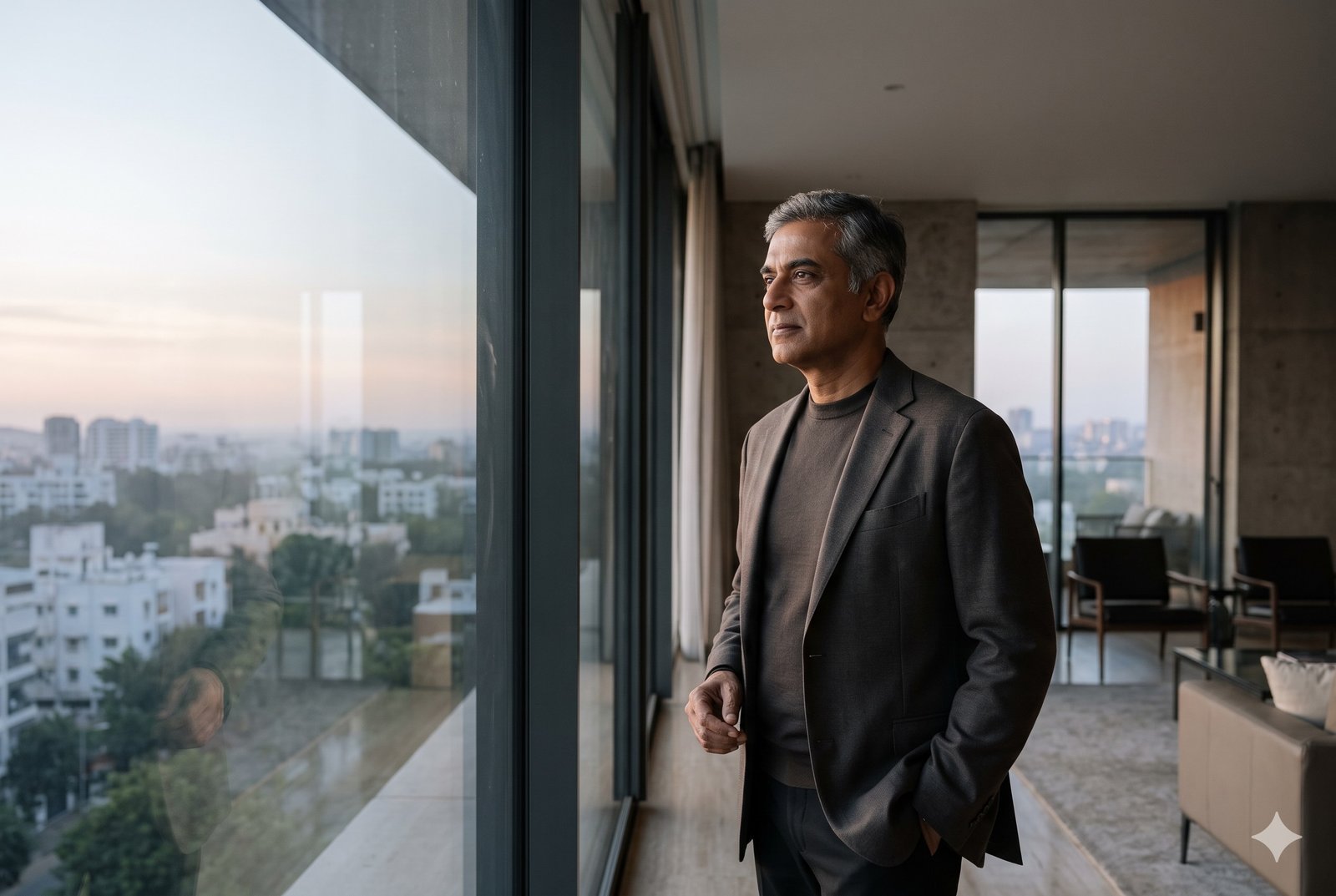
Imagine an executive whose working life already revolves around targets.
Revenue. Growth. Deadlines. Travel schedules. Decisions made before breakfast.
Now imagine that recovery becomes another performance review.
Sleep must achieve a certain score. Training must remain perfectly consistent. Every meal must justify its composition. A morning that begins with fatigue becomes evidence of personal failure.
In this scenario, wellness has not necessarily created a different relationship with life. It has imported the language of work into the hours intended for restoration.
The problem is not measurement itself. It is the authority we give it.
Consumer sleep technologies illustrate the distinction. Research has found that some wearables can provide useful estimates of sleep timing and duration, while identifying individual sleep stages remains more challenging. Findings also vary across devices and validation methods.
A sleep score can therefore be a prompt for reflection. It should not become a complete verdict on the night, the body, or the day ahead.
The high-trust question is not, “How do I obey this number?”
It is, “What does this information mean alongside how I feel, what has happened recently, and what a qualified professional might need to assess?”
Internal Intelligence Is Not the Same as Instinct
The phrase “listen to your body” is appealing. It is also incomplete.
Bodily sensations are real experiences, but their meaning is not always obvious. Interoception involves interpretation as well as sensing; research into its measurement and relationship with health is still developing.
This matters because internal intelligence should never be presented as an infallible diagnostic system.
Feeling well does not eliminate the need for appropriate preventive care. Feeling tired does not, by itself, identify the cause. A sense of calm is not proof that every relevant health marker is within a desirable range.
The more responsible position is both attentive and humble:
Notice the experience. Consider the context. Avoid rushing to a conclusion.
For example, a reflective check-in might ask:
- Does my energy feel different from my usual pattern?
- Am I hungry, distracted, rushed, or eating because the meeting finally ended?
- Does today’s planned activity feel manageable?
- Has this change persisted, or is it an isolated day?
- Is this something to observe, or something to discuss with a clinician?
These questions do not diagnose. They help organise attention.
At its best, internal intelligence does not encourage someone to become their own physician. It helps them become a clearer participant in their own care.

Why the Most Enduring Wellness Practices Are Often Subtle
Subtlety should not be confused with weakness.
A practice can be quiet in presentation and substantial in its contribution. Walking does not need to look futuristic to matter. Strength training does not require a luxury setting to be useful. A routine does not become less meaningful because it is familiar.
The World Health Organization recommends regular physical activity for adults, including 150–300 minutes of moderate-intensity aerobic activity, or an equivalent amount of vigorous activity, each week, alongside muscle-strengthening activity on at least two days. These recommendations connect ordinary, repeatable behaviours with significant health benefits.
The editorial lesson is not that everyone needs the same timetable. It is that novelty and value are different things.
Subtle practices often have another advantage: they can be designed to fit the life that actually exists.
A walk can sit between appointments. A protected evening boundary can be agreed with a household. A manageable strength session can be scheduled before the calendar fills. A quiet pause can mark the transition from work to home.
None of these requires a person to perform wellness for an audience.
That is the kind of continuity Prana Privé seeks to place at the centre of the longevity conversation: not an impressive week followed by abandonment, but a considered rhythm that remains possible during demanding seasons.
The useful question becomes less theatrical.
Not, “How extraordinary is this intervention?”
But, “Can this become a supportive part of my life without making that life smaller?”
The Difference Between a Ritual and a Protocol
A protocol specifies an action.
A ritual gives that action a place within experience.
A protocol might describe a planned period of movement. A ritual might be the walk that closes the working day, allowing the person to leave the office mentally as well as physically.
A protocol might allocate time for reflection. A ritual might be sitting quietly before the first conversation of the morning, without immediately reaching for a screen.
Neither is inherently superior. Precise protocols have an important role in healthcare, exercise planning, and other structured settings. But in everyday wellness, a meaningful ritual offers a different organising principle: it belongs to the person rather than merely appearing on a checklist.
For Prana Privé, a restorative ritual need not be elaborate. Its refinement lies in its appropriateness.
Does it suit the individual’s circumstances?
Does it create room rather than another obligation?
Can it be adapted without a sense of failure?
A ritual loses its value when its appearance becomes more important than its purpose. The setting may be beautiful, but beauty is not a clinical outcome. The experience may be calming, but calm should not be marketed as proof of disease prevention or extended lifespan.
Trust begins when those distinctions remain visible.
Technology Should Reveal Patterns, Not Replace Judgement
There is a compelling place for technology in this quieter vision of longevity.
A well-chosen device may make an otherwise unnoticed pattern easier to discuss. Repeated observations can create a more useful conversation than a vague recollection of “not feeling quite right”.
But the measurement must remain attached to its limitations.
A validation study of a consumer ring, for example, found useful accuracy for certain nocturnal heart-rate and heart-rate-variability measures, while other measures and shorter sampling windows performed differently. The researchers also noted the need to examine performance in waking and everyday conditions.
That is an important corrective to a common assumption: if one metric from a device is accurate in one setting, every metric must be equally meaningful everywhere.
A high-trust approach asks more precise questions:
- What signal is the device actually collecting?
- Which displayed values are estimates derived from that signal?
- Has this particular measure been independently validated?
- Does the evidence apply to people and conditions like mine?
- What decision would change because of this information?
If the last answer is “none”, more data may not be the next priority.
The most elegant technology is not necessarily the technology we consult most often. It may be the technology that gives us a useful answer and then allows us to return to living.

High-Trust Longevity Requires More Than Personalisation
“Personalised” is one of wellness marketing’s most attractive words. Yet attaching someone’s name to a report does not establish that its recommendations are appropriate.
For Prana Privé, high-trust longevity is best understood as an editorial standard built around discernment.
That standard asks for several things.
Clear distinctions between evidence and possibility
An emerging idea can be interesting without being established. A plausible mechanism is not the same as a demonstrated benefit in people. A favourable change in a measurement is not automatically proof of a longer life.
A credible conversation leaves room for uncertainty rather than disguising it.
Proportionate recommendations
Not every observation requires an intervention.
Before adding another product, test, or routine, the more useful discussion may be whether the existing plan is understandable, manageable, and appropriate to the person’s circumstances.
This is not an argument against advanced care. It is an argument against confusing complexity with quality.
Respect for the whole person
A recommendation exists inside a life.
Travel, caregiving, work, finances, food preferences, physical limitations, and personal meaning all shape what can realistically be sustained.
A technically impressive plan that ignores those circumstances may be poorly matched to its intended recipient.
Privacy and informed choice
In the Prana Privé vision, discretion should include clarity about information—not only a private setting.
Before sharing wearable exports, questionnaires, or sensitive health documents with any provider, a person should be able to ask what is collected, why it is needed, who can access it, and what choices they retain.
These are standards worth requesting, not capabilities that should be assumed.
A More Intelligent Response to a Difficult Week
Consider a hypothetical professional returning from several days of travel.
Their wearable reports an unfavourable recovery score. They feel tired. Their diary contains another demanding day.
An optimisation-first response might be to add interventions immediately: another supplement, a more elaborate morning routine, a strenuous attempt to “get back on track”.
An intelligence-led response begins with context.
What changed during the trip? How much opportunity was there for rest? Is the fatigue unusual for this person? Are there symptoms that need medical attention? Does the day’s plan need adjustment?
The distinction is not between action and inaction.
It is between reacting to a number and making a proportionate decision.
Sometimes the next step may be a simpler schedule. Sometimes it may be a conversation with a qualified clinician. Sometimes the information may not justify any meaningful change.
This is where external information and internal awareness become complementary. Neither is asked to carry the whole burden of explanation.
The person remains more than the reading.
The Prana Privé Perspective: Refinement Through Responsiveness
The future of high-trust longevity is not necessarily a future with fewer instruments. It is a future with better boundaries around their authority.
At Prana Privé, the guiding perspective is one of stewardship: caring for vitality without turning life into an endless correction project.
That means making room for ambition and recovery.
For measurement and uncertainty.
For disciplined movement and unmeasured pleasure.
For professional care and personal participation.
A quiet practice is not valuable merely because it is quiet. Nor is a sophisticated intervention untrustworthy merely because it is sophisticated. What matters is its evidence, its purpose, its suitability, and the honesty with which it is offered.
The most enduring wellness practices often appear subtle because their significance lies in repetition rather than spectacle. They become part of the way a person lives, not a temporary campaign against the way they age.
Perhaps that is the more refined promise of longevity: not complete control over the body, but a more informed, respectful relationship with it.
Not a life spent pursuing the perfect signal.
A life in which we know how to listen—and when to seek help interpreting what we hear.
A private next step
Explore Prana Privé’s longevity philosophy and consultation pathways for a considered conversation about your priorities, your present rhythm, and the kind of wellbeing you wish to sustain.
Editorial note: This article provides general information and a brand perspective on wellbeing. It does not provide medical advice, establish a diagnosis, or recommend changing prescribed treatment. Consumer wellness devices and personal awareness do not replace appropriate clinical assessment.