
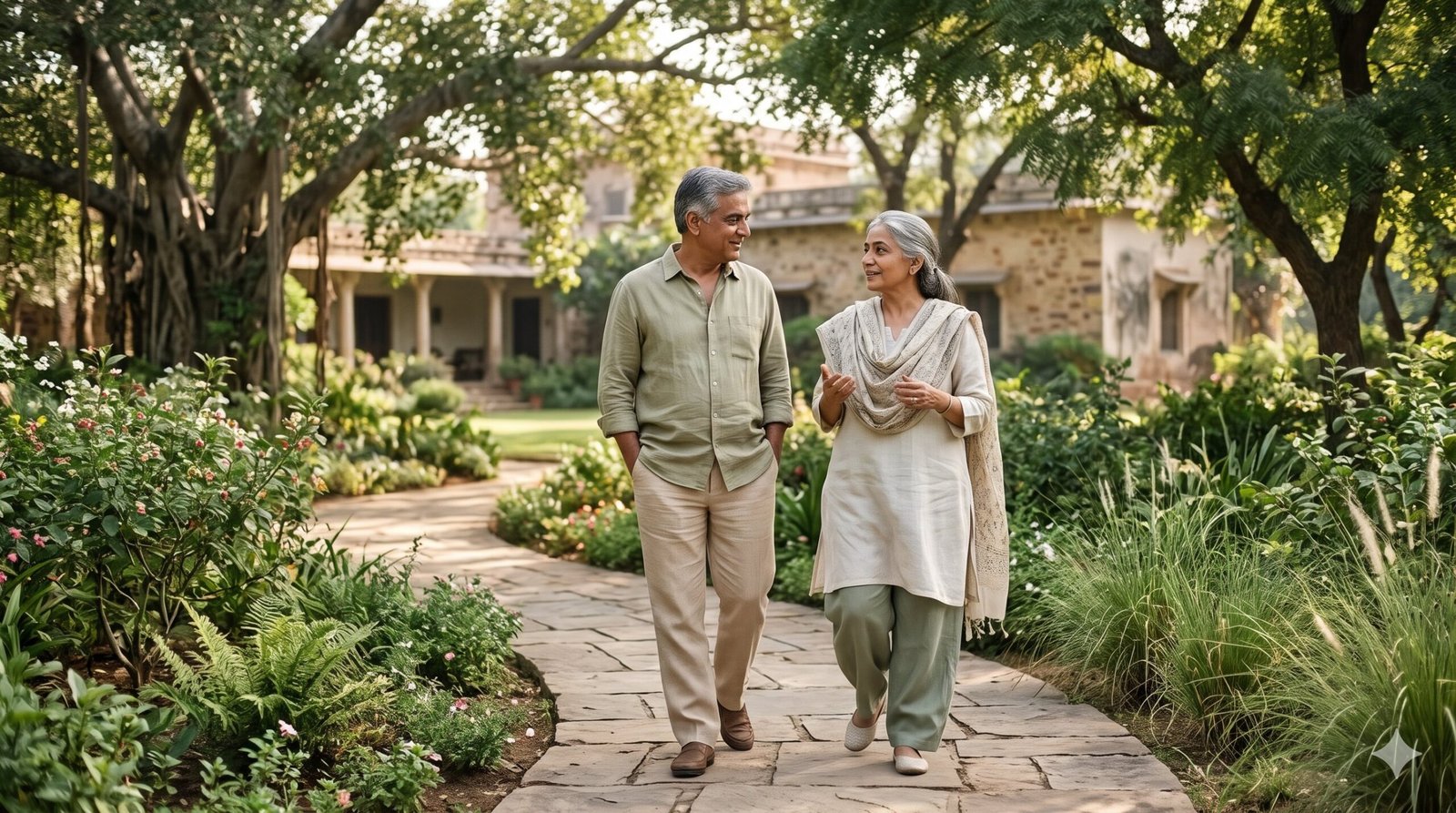
Beyond the number of years ahead lies a more personal ambition: the freedom to keep living a life that feels like your own.
Begin with a life, not a number
Imagine yourself ten or twenty years from now.
Not your age on a birthday invitation. Not a figure on a medical report. Imagine an ordinary day you would genuinely like to inhabit.
Perhaps you are exploring a coastal town, comfortable enough to take the longer route back. Perhaps you are making breakfast in your own kitchen, choosing how the morning unfolds. Perhaps you are sitting across from someone you love, following the conversation and feeling entirely part of it.
The details will be personal.
For one person, the aspiration is to keep travelling. For another, it is to remain involved in family life without every gathering becoming an exercise in endurance. For someone else, it is the freedom to continue working, creating, learning, or contributing.
These hopes bring the conversation about healthspan vs lifespan into focus.
Lifespan concerns how long we live. Healthspan concerns the portion of that life spent in good health. The distinction invites us to consider not only the years ahead, but the abilities and experiences we hope those years will hold.
The question becomes more intimate than “How long do I want to live?”
It becomes: “What do I want my future to feel like?”
Healthspan vs lifespan: understanding the difference
A longer life offers more time. It does not, by itself, tell us how that time will be experienced.
The National Institute on Aging describes healthspan as the portion of lifespan spent in good health. Its discussion of longevity research distinguishes extending healthy years from simply extending life.
But living well also needs a broader, more human frame.
The World Health Organization defines healthy ageing around maintaining the functional ability that enables wellbeing in older age. This includes being able to meet basic needs, move around, make decisions, maintain relationships, and contribute to society.
That distinction matters.
A life cannot be understood only through the presence or absence of a diagnosis. A person living with a managed health condition may still enjoy meaningful relationships, make their own choices, and participate in activities they value.
WHO’s approach recognises that these possibilities depend on both personal capacity and the environments and support available to someone.
Healthspan is therefore a useful starting point—not a verdict on whose life is valuable.
The ambition is not to create a future without vulnerability.
It is to preserve possibilities, while remaining open to the support and adaptations that may help us enjoy them.
The freedom to keep travelling
Travel makes the idea of future wellbeing tangible.
You may picture a favourite city revisited slowly, a train journey through unfamiliar countryside, or a holiday with family that leaves room for your own curiosity.
Look beneath the destination, and a more practical wish appears.
You want to move comfortably. To enjoy an outing without spending the entire day negotiating it. To have choices about where you go and how you participate.
For some, that might mean walking through a museum. For others, it may mean using accessible transport, arranging assistance, or choosing accommodation that makes the experience easier.
These are not lesser versions of travel.
They are ways of keeping the world open.
WHO identifies accessible buildings, transport, and supportive surroundings as important to enabling people to continue doing what matters to them, including when their capacities change.
The aspiration, then, need not be “I must travel exactly as I did at thirty.”
It might be: “I want curiosity to remain part of my life—and I want the support that allows me to follow it.”
That is a more generous definition of ageing well.
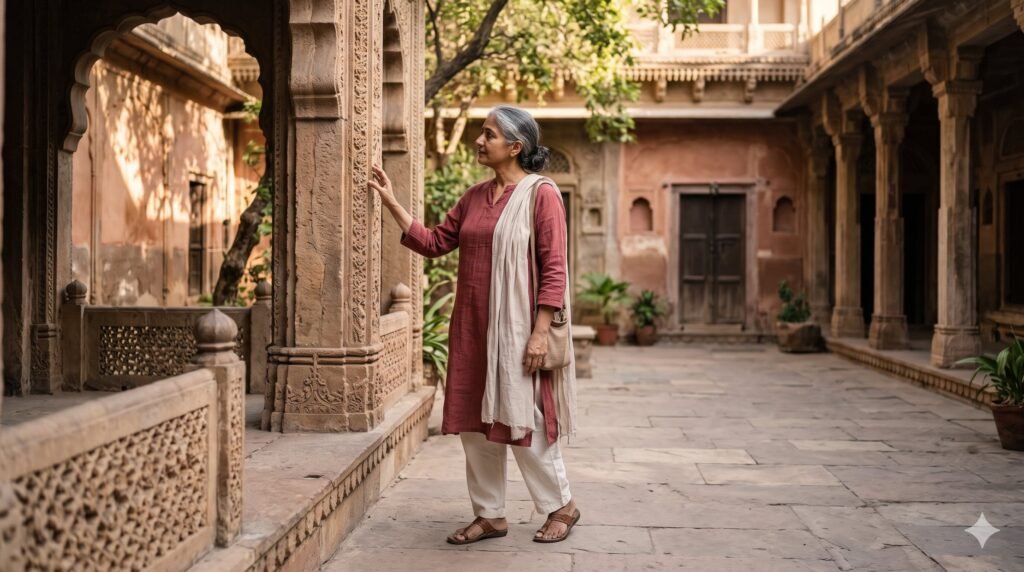
Independence is also the freedom to choose
When you imagine remaining independent, what do you mean?
Perhaps it is managing your own day. Preparing a meal you enjoy. Deciding when to go out. Understanding your options and having a voice in decisions that concern you.
Independence is often pictured as doing everything without assistance.
Yet autonomy and assistance can coexist.
An accessible home, a walking aid, reliable transport, or help with a demanding task may protect someone’s ability to choose how they live. WHO’s healthy-ageing framework explicitly considers the interaction between individual capacity and the surrounding environment.
This allows for a less brittle ambition.
Rather than promising ourselves that we will never need help, we can ask what would help us retain agency.
What parts of daily life feel especially important to manage ourselves?
Where would accepting support create more freedom?
What could make our homes and routines easier to inhabit in the years ahead?
Healthy longevity does not have to mean proving that we need nobody.
It can mean remaining the author of our lives, even when others help with some of the practical details.
Being present in the relationships that matter
Some of the most meaningful hopes for later life have little to do with extraordinary experiences.
They concern ordinary closeness.
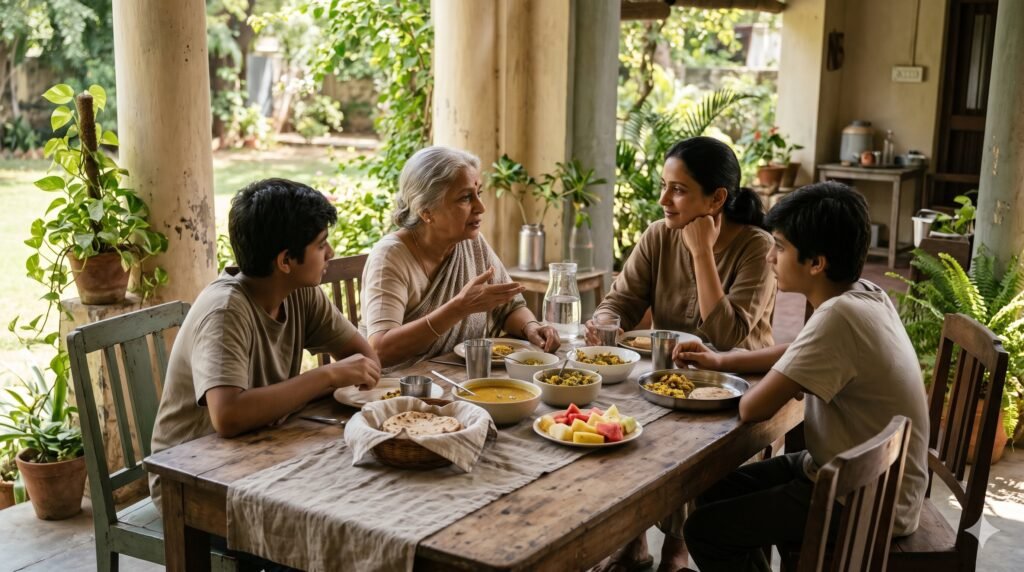
Listening to a grandchild explain something with great seriousness. Sharing a meal without feeling hurried. Continuing a friendship that has outlasted several versions of your life.
You may want the energy to attend. You may also want the opportunity to listen, speak, laugh, and feel included.
Relationships are not an ornamental addition to the longevity conversation. WHO includes building and maintaining relationships among the central abilities that healthy ageing should support.
This invites a different way of thinking about quality of life.
Not only: “What would I like to achieve?”
Also: “Who do I want to remain available to?”
And: “Where do I want to keep belonging?”
A future worth caring for might contain fewer impressive milestones than we imagine—and more afternoons with people whose company feels like home.
Ageing well is not a promise of control
There is a temptation to present longevity as a project with a predictable outcome.
Make the right choices. Follow the right routine. Preserve the future.
Real life is less orderly.
WHO notes that ageing experiences vary widely and that health is shaped by physical and social environments as well as personal characteristics. There is no single, typical older person.
This matters because care can easily become self-judgement.
An illness is not proof that someone failed to live correctly. A changing body is not a moral disappointment. Needing support does not make a life less meaningful.
There are worthwhile actions we can take, but no honest approach can guarantee a particular number of healthy years.
A thoughtful view of longevity wellbeing therefore holds two ideas together: our choices matter, and they do not control everything.
The purpose of looking ahead is not to become anxious about every possible decline.
It is to notice what deserves attention now.
Let personal aspirations give everyday care a purpose
Once you know what you hope to preserve, familiar advice can acquire a more personal meaning.
Physical activity is no longer only something to complete. It connects with the wish to remain mobile.
Eating well is not simply a rule. It becomes part of caring for the life you want to continue participating in.
WHO identifies regular physical activity, a balanced diet, and avoiding tobacco as behaviours that can help reduce the risk of noncommunicable disease and support physical and mental capacity. Supportive environments remain important alongside those individual actions.
The practical approach should fit your health, abilities, and circumstances—not an idealised routine borrowed from somebody else.
If a future goal raises questions about symptoms, mobility, or an existing condition, make it part of a conversation with a qualified healthcare professional.
“I want to keep travelling comfortably” can be a useful way to explain what matters to you.
So can “I want to remain confident managing my day.”
These statements give the conversation a human destination.
The point is not to turn life into a continuous preparation for later.
It is to let the future clarify what deserves care in the present.
What do you want to preserve?
Set aside a quiet moment and complete these sentences:
- I would like to remain able to…
- The people I want to keep showing up for are…
- An ordinary pleasure I do not want to overlook is…
- A form of independence that matters to me is…
- A change or source of support I would be willing to welcome is…
Be specific.
“Better health” is a worthy intention, but “being comfortable enough to enjoy a morning out with my partner” reveals more about the life behind it.
You do not need a long list.
Choose three things you value. Then ask whether your present routines, surroundings, and support reflect their importance.
There may be one small adjustment worth making. There may be a conversation you have postponed. There may simply be a pleasure you want to stop leaving until later.
A future that still feels like your own
At Prana Privé, we believe the most meaningful conversation about longevity begins with the life you wish to inhabit.
Not a competition with time. Not an instruction to remain unchanged.
An invitation to consider what makes your days worth caring for: freedom, connection, curiosity, contribution, and the ability to choose.
Lifespan asks how many years.
Healthspan asks about health within those years.
The personal question goes one step further: what do you hope to keep experiencing, and what might help you remain part of it?
Begin there.
Write down three things you want to preserve in the years ahead. Choose one to give your attention to this week.
For more considered perspectives on longevity, vitality, and living well, join Prana Privé’s Private Letters.
Editorial note: This article provides general information and reflection, not individual medical advice. Personal health decisions should be discussed with a qualified healthcare prof

0 Comments